Table of Contents
- Introduction
- What Is a Titanium Ball Valve?
- How Does a Ball Valve Work?
- Why Choose a Titanium Valve?
- Key Advantages of Titanium Ball Valves
- Common Types of Titanium Ball Valves
- Industrial Applications
- Titanium vs Stainless Steel Ball Valves
- How to Select the Right Titanium Ball Valve
- Maintenance Tips
- Frequently Asked Questions
- Conclusion
Introduction
Valves used in demanding industrial environments must withstand aggressive process fluids, elevated temperatures, and high operating pressures while maintaining dependable sealing performance. Standard stainless steel valves perform well in many services, but some applications require materials with greater resistance to corrosion and chemical attack.
A titanium ball valve is designed for these demanding conditions. Manufactured from titanium alloy, it combines excellent mechanical properties with outstanding corrosion resistance, making it suitable for industries such as chemical processing, offshore, petrochemical, power generation, and seawater handling.
This guide explains how a titanium ball valve works, its advantages, common designs, and the applications where it delivers the greatest value.
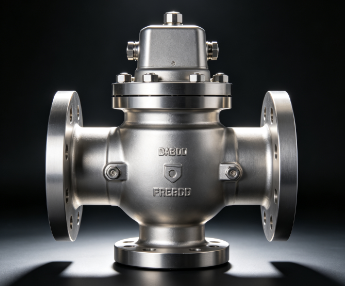
What Is a Titanium Ball Valve?
A titanium ball valve is a quarter-turn valve that uses a precision-machined spherical ball to control fluid flow. Rotating the ball 90 degrees opens or closes the flow path quickly and reliably.
Unlike conventional carbon steel or stainless steel valves, a titanium valve is manufactured from titanium or titanium alloy materials that provide superior resistance to corrosion while maintaining high strength and relatively low weight.
Because of these properties, titanium ball valves are frequently selected for systems handling:
- Acids
- Chlorides
- Seawater
- Salt solutions
- Oxidizing chemicals
- High-purity process fluids
How Does a Ball Valve Work?
Like any ball valve, the valve contains a spherical ball with a through-hole.
When the bore aligns with the pipeline:
- The valve is fully open.
- Fluid passes through with minimal restriction.
When the ball rotates 90 degrees:
- The flow path is blocked.
- The valve provides reliable shut-off.
Ball valves are valued for:
- Fast operation
- Tight sealing
- Low pressure loss
- Simple maintenance
- Long service life
Why Choose a Titanium Valve?
Titanium is widely recognized as one of the most corrosion-resistant engineering metals available for industrial service.
When exposed to oxygen, titanium naturally forms a thin oxide film that protects the base metal from corrosion. If the surface is damaged, this protective layer quickly reforms under suitable conditions.
Because of this self-protecting surface, a titanium valve performs exceptionally well in many environments where conventional materials deteriorate more rapidly.
Key Advantages of Titanium Ball Valves
Excellent Corrosion Resistance
One of the primary reasons industries select a titanium ball valve is its excellent corrosion resistance.
Titanium performs exceptionally well in contact with:
- Seawater
- Chloride solutions
- Oxidizing acids
- Wet chlorine
- Saltwater
- Marine atmospheres
Its natural oxide film provides long-term corrosion resistance, reducing material degradation in demanding environments.
High Strength with Lightweight Construction
Titanium offers an excellent strength-to-weight ratio.
Compared with many conventional valve materials, titanium provides:
- High structural strength
- Reduced component weight
- Easier installation
- Lower equipment loads
The lightweight nature of titanium is particularly beneficial for offshore platforms and large piping systems where equipment weight influences structural design.
High-Temperature Performance
Many industrial processes operate under high temperature conditions.
Titanium alloys maintain stable mechanical properties across a wide operating temperature range, making them suitable for numerous industrial systems involving heated fluids and process gases.
High Pressure Capability
Properly engineered titanium ball valves are suitable for high pressure service.
Combined with their excellent mechanical properties, titanium valves are widely used in demanding pressure systems where corrosion resistance is equally important.
Long Service Life
Because titanium resists corrosion and erosion, valve components typically experience less material loss during operation.
Lower wear often results in:
- Longer maintenance intervals
- Reduced replacement frequency
- Lower lifecycle costs
Common Types of Titanium Ball Valves
Several configurations are available depending on system requirements.
Floating Ball Valve
A floating ball valve supports the ball with valve seats instead of fixed trunnions.
Characteristics include:
- Compact design
- Excellent sealing
- Suitable for low and medium pressure applications
- Lower manufacturing cost
Floating ball valves are widely used throughout chemical plants and general industrial systems.
Trunnion Mounted Ball Valve
A trunnion mounted ball valve supports the ball using upper and lower trunnions.
Advantages include:
- Reduced operating torque
- Stable sealing under high pressure
- Suitable for large diameters
- Longer service life in demanding applications
These valves are commonly installed in:
- Petrochemical plants
- Offshore pipelines
- Power generation facilities
- Large process systems
Full Port Ball Valve
A full port titanium ball valve has an internal bore equal to the pipeline diameter.
Benefits include:
- Minimal pressure drop
- Smooth flow
- Reduced turbulence
- Easy pipeline cleaning
- Suitable for slurry and process fluids
Full-port designs are frequently selected where unrestricted flow is required.
Industrial Applications
Titanium ball valves are used across many industrial applications.
Chemical Processing
One of the largest markets for titanium valves is chemical processing.
Many chemical plants handle corrosive media that quickly damage conventional valve materials.
Typical process fluids include:
- Nitric acid
- Chlorides
- Organic acids
- Oxidizing chemicals
- Salt solutions
Titanium valves provide dependable performance in these demanding environments.
Seawater Systems
Seawater contains chlorides that accelerate corrosion in many metals.
Titanium's natural corrosion resistance makes it an excellent choice for:
- Seawater cooling systems
- Desalination plants
- Marine piping
- Offshore water treatment
Offshore Industry
Weight reduction is an important consideration for offshore platforms.
Titanium valves combine lightweight construction with corrosion resistance, helping reduce equipment weight while providing long-term durability in marine environments.
Petrochemical Industry
The petrochemical sector frequently handles aggressive process fluids under elevated temperatures and pressures.
Titanium ball valves are selected for applications involving:
- Process pipelines
- Storage systems
- Chemical reactors
- Transfer systems
Power Generation
Many power generation facilities use titanium valves for specialized cooling systems and corrosion-resistant process lines.
Their durability helps support stable operation in challenging service conditions.
Titanium Ball Valve vs Stainless Steel Ball Valve
| Feature | Titanium Ball Valve | Stainless Steel Ball Valve |
|---|
| Corrosion Resistance | Excellent | Good |
| Weight | Lightweight | Heavier |
| Mechanical Strength | High Strength | High |
| Chloride Resistance | Excellent | Moderate |
| Seawater Service | Excellent | Good |
| High Temperature | Excellent | Good |
| Cost | Higher Initial Cost | Lower Initial Cost |
| Typical Applications | Chemical Processing, Offshore, Marine | General Industrial Service |
Although titanium valves usually have a higher purchase price, they often provide lower maintenance costs in aggressive environments.
How to Select the Right Titanium Ball Valve
Several factors should be evaluated before selecting a titanium valve.
Process Medium
Understand the composition of the fluid.
Different chemicals affect materials differently.
Pressure Rating
Choose a valve designed for the required high pressure operating conditions.
Temperature
Confirm that the selected valve material is compatible with the expected high temperature range.
Valve Design
Select the appropriate configuration:
- Floating Ball Valve
- Trunnion Mounted Ball Valve
- Full Port Ball Valve
The best option depends on system pressure, pipe size, and operating requirements.
Connection Type
Available end connections include:
- Flanged
- Threaded
- Butt Weld
- Socket Weld
The connection should match the piping system specification.
Maintenance Tips
Titanium ball valves generally require less maintenance than many conventional materials, but routine inspection is still recommended.
Best practices include:
- Inspect valve seats periodically.
- Check sealing performance.
- Operate the valve regularly to prevent sticking.
- Inspect bolted joints.
- Verify actuator operation where applicable.
- Replace worn soft seals when necessary.
Proper maintenance helps maximize valve service life and operating reliability.
Frequently Asked Questions
What is a titanium ball valve?
A titanium ball valve is a quarter-turn valve manufactured from titanium or titanium alloy materials that provide excellent corrosion resistance, high strength, and reliable shut-off performance.
Why are titanium valves used in chemical processing?
Titanium valves resist many corrosive chemicals and provide dependable performance in aggressive process environments where conventional materials may deteriorate more rapidly.
Can titanium ball valves be used for seawater?
Yes. Titanium offers outstanding resistance to seawater, making it one of the preferred materials for marine cooling systems, desalination plants, and offshore facilities.
What is the difference between a floating ball valve and a trunnion mounted ball valve?
A floating ball valve supports the ball with valve seats and is commonly used for smaller sizes and moderate pressures.
A trunnion mounted ball valve uses upper and lower supports to reduce operating torque and is suitable for larger valves and high-pressure applications.
Are titanium ball valves suitable for high-temperature service?
Yes. Many titanium alloys maintain their mechanical properties under elevated temperatures, making them suitable for numerous industrial applications.
Is a full port titanium ball valve better?
A full port valve provides minimal flow restriction and lower pressure loss, making it suitable for applications requiring maximum flow capacity.
Conclusion
A titanium ball valve combines the proven performance of a ball valve with the exceptional properties of titanium alloy materials. Its excellent corrosion resistance, high strength, lightweight construction, and ability to perform under high pressure and high temperature conditions make it an excellent choice for demanding industrial services.
Industries such as chemical processing, petrochemical, power generation, offshore, and seawater treatment continue to rely on titanium valves for applications involving aggressive process fluids and challenging operating environments.
Whether selecting a floating ball valve, a trunnion mounted ball valve, or a full port design, evaluating process media, pressure, temperature, and installation requirements helps ensure reliable performance and long service life.