Ball valves are widely used across oil and gas, petrochemical, power generation, water treatment, and industrial processing systems. Their simple operation, reliable sealing, and fast shutoff capability make them one of the most common valve types for pipeline isolation and flow control.
Among the various ball valve designs, two configurations dominate industrial applications: the floating ball valve and the trunnion mounted ball valve. Although both operate using a rotating ball with a bore through its center, their internal structures, pressure-handling capabilities, and sealing mechanisms differ significantly.
Understanding the differences between these two designs helps engineers select the right valve for operating conditions, pressure ratings, maintenance requirements, and project budgets.
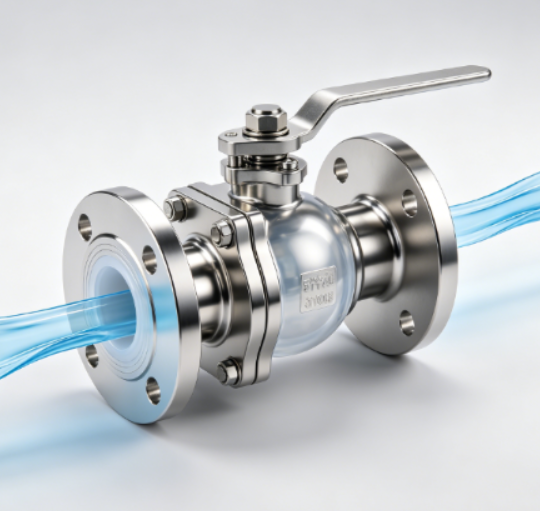
A floating ball valve uses a ball that is not mechanically anchored at the top and bottom. The ball is held in place by the valve seats and stem connection.
When line pressure enters the valve, the pressure pushes the ball toward the downstream seat, creating a tight seal. This pressure-assisted sealing principle is one of the defining characteristics of a floating ball valve.
How a Floating Ball Valve Works
- Fluid enters the valve body.
- Pressure acts on the floating ball.
- The ball moves slightly downstream.
- The ball presses against the downstream seat.
- A seal is formed, preventing leakage.
This design works well in low- to medium-pressure applications and smaller valve sizes.
Advantages of Floating Ball Valves
- Simple construction
- Lower manufacturing cost
- Compact dimensions
- Easy maintenance
- Good sealing performance in moderate-pressure systems
Limitations of Floating Ball Valves
- Increased operating torque at higher pressures
- Larger seat wear under demanding conditions
- Less suitable for large-diameter valves
- Performance may decline in extremely high-pressure services
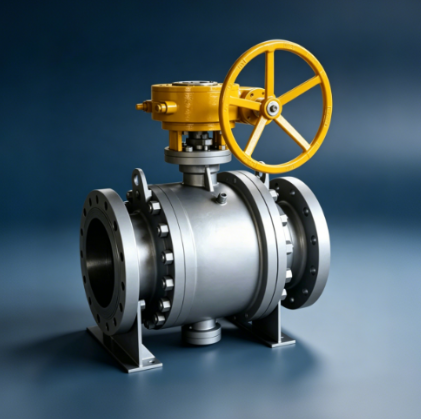
A trunnion mounted ball valve features a ball that is mechanically supported by trunnions at both the top and bottom. Instead of moving under pressure, the ball remains fixed while the seats move toward the ball to achieve sealing.
This trunnion design significantly reduces operating torque and improves performance in high-pressure applications.
How a Trunnion Mounted Ball Valve Works
In a trunnion mounted design:
- The ball is anchored by upper and lower trunnions.
- The stem rotates the ball through a quarter turn.
- Spring-loaded or pressure-energized seats move toward the ball.
- Tight sealing is maintained even under high pressure.
Because the ball remains stable, operating forces are much lower than those found in comparable floating ball valves.
Floating Ball Valve vs Trunnion Ball Valve: Quick Comparison
| Feature | Floating Ball Valve | Trunnion Mounted Ball Valve |
|---|
| Ball Support | Supported by seats | Supported by trunnions |
| Ball Movement | Ball floats slightly | Ball remains fixed |
| Sealing Method | Pressure pushes ball against downstream seat | Seats move toward ball |
| Operating Torque | Higher | Lower |
| Valve Size Range | Small to medium | Medium to large |
| Pressure Capability | Moderate | High pressure |
| Cost | Lower | Higher |
| Maintenance | Simpler | More complex |
| API 6D Availability | Available | Commonly specified |
| Double Block and Bleed | Limited | Common |
Understanding the Trunnion Design
The defining feature of a trunnion mounted ball valve is the trunnion design itself.
A trunnion is a mechanical anchoring shaft that supports the ball from above and below. This support prevents the ball from shifting under line pressure.
As valve size increases, the force acting on the ball also increases. Without trunnion support, operating torque can become excessive. By stabilizing the ball, the trunnion design allows manufacturers to produce large-diameter valves that remain practical to operate.
This design is commonly used in:
- Transmission pipelines
- Offshore platforms
- LNG facilities
- Refineries
- High-pressure gas systems
- Compressor stations
How the Downstream Seat Functions
The downstream seat plays an important role in both valve types.
In Floating Ball Valves
Pressure pushes the floating ball against the downstream seat. The downstream seat becomes the primary sealing surface.
The higher the pressure, the greater the sealing force applied to the seat.
In Trunnion Ball Valves
The ball remains stationary. Instead, spring-loaded seats move toward the ball to create sealing contact.
The downstream seat still contributes to sealing performance, but the sealing mechanism differs significantly from the floating ball design.
Flow Path Characteristics
The flow path inside both valve types is generally straight and unrestricted when fully open.
Benefits include:
- Low pressure drop
- High flow capacity
- Reduced turbulence
- Efficient flow control
Because the bore aligns with the pipeline, fluids can pass through with minimal resistance.
For this reason, ball valves are widely selected for applications requiring reliable isolation without significantly affecting system flow efficiency.
Performance Under High Pressure
One of the largest distinctions between floating and trunnion ball valves is behavior under high pressure.
Floating Ball Valve
As pressure rises:
- Ball loading increases
- Seat stress increases
- Operating torque increases
- Seat wear can accelerate
Trunnion Mounted Ball Valve
Under identical conditions:
- Ball position remains stable
- Torque remains relatively low
- Seat loading is better controlled
- Service life is often extended
For high pressure transmission systems, engineers frequently choose trunnion mounted ball valves because they offer more predictable performance.
API 6D Requirements
Many pipeline operators specify compliance with API 6D, the industry standard for pipeline valves.
API 6D covers:
- Design requirements
- Pressure testing
- Fire-safe performance
- Material requirements
- Quality assurance
- Inspection procedures
Trunnion mounted ball valves used in oil and gas transmission pipelines are commonly manufactured according to API 6D specifications.
While floating ball valves can also meet API 6D requirements, trunnion designs are more frequently selected for large pipeline projects.
Double Block and Bleed Capability
One major advantage of many trunnion mounted ball valves is their ability to provide double block and bleed (DBB) functionality.
What Is Double Block and Bleed?
Double block and bleed means:
- Upstream seat seals.
- Downstream seat seals.
- The cavity between the seats can be vented or drained.
This arrangement allows operators to verify isolation before performing maintenance.
Benefits of Double Block and Bleed
- Improved safety
- Reduced maintenance risks
- Easier leak verification
- Compliance with many pipeline standards
Double block and bleed capability is particularly valuable in oil and gas operations where system isolation must be confirmed before equipment servicing.
Applications of Floating Ball Valves
Floating ball valves are commonly used in:
- Water distribution systems
- Chemical processing
- Utility services
- HVAC systems
- Industrial equipment
- General-purpose pipelines
They are often selected when:
- Pressure levels are moderate
- Valve sizes are smaller
- Budget considerations are important
Applications of Trunnion Mounted Ball Valves
Trunnion mounted ball valves are widely used in:
- Oil and gas pipelines
- Offshore platforms
- LNG terminals
- Petrochemical plants
- High-pressure gas transmission
- Refining facilities
They are preferred when:
- Large valve diameters are required
- Operating pressures are high
- Low operating torque is desired
- Double block and bleed functionality is needed
Which Ball Valve Design Should You Choose?
The choice depends on operating conditions.
Choose a floating ball valve when:
- Valve sizes are relatively small
- System pressure is moderate
- Lower initial cost is preferred
- Simplicity is important
Choose a trunnion mounted ball valve when:
- High pressure conditions exist
- Large pipeline diameters are involved
- Reduced operating torque is needed
- Double block and bleed functionality is required
- Long-term reliability is a priority
Frequently Asked Questions (FAQs)
What is the main difference between a floating ball valve and a trunnion ball valve?
A floating ball valve uses a ball that moves slightly under pressure and seals against the downstream seat. A trunnion mounted ball valve uses a ball anchored by trunnions, while the seats move toward the ball to create the seal.
Why are trunnion mounted ball valves used for high-pressure applications?
The trunnion design supports the ball and reduces the forces transmitted to the seats. This results in lower operating torque and improved performance under high pressure conditions.
What is a downstream seat in a ball valve?
The downstream seat is the seat located on the outlet side of the valve. In floating ball valves, it often serves as the primary sealing surface because pressure pushes the ball against it.
What does quarter turn operation mean?
Quarter turn means the valve moves from fully open to fully closed with a 90-degree rotation of the stem and ball.
What is double block and bleed?
Double block and bleed is a valve configuration that provides sealing from both upstream and downstream seats while allowing the cavity between them to be vented or drained for isolation verification.
Are trunnion ball valves compliant with API 6D?
Many trunnion mounted ball valves are designed and tested according to API 6D standards, making them suitable for pipeline service in the oil and gas industry.
Can floating ball valves be used for flow control?
While ball valves can provide basic flow control, they are primarily designed for on/off service. For precise throttling applications, other valve types may be more suitable.
Which valve has a longer service life?
Service life depends on operating conditions, materials, maintenance practices, and media characteristics. In demanding high-pressure environments, trunnion mounted ball valves often experience lower seat loading and may provide longer operational life.
Conclusion
Both floating ball valves and trunnion mounted ball valves offer reliable shutoff performance and efficient flow paths. The floating ball design provides a cost-effective solution for smaller, moderate-pressure systems, while the trunnion design delivers enhanced stability, lower operating torque, and dependable sealing for large-diameter and high-pressure applications.
When selecting a ball valve design, engineers should evaluate line pressure, valve size, sealing requirements, operating frequency, and industry standards such as API 6D. Matching the valve design to the application helps achieve dependable performance over long periods of operation while minimizing maintenance requirements.